
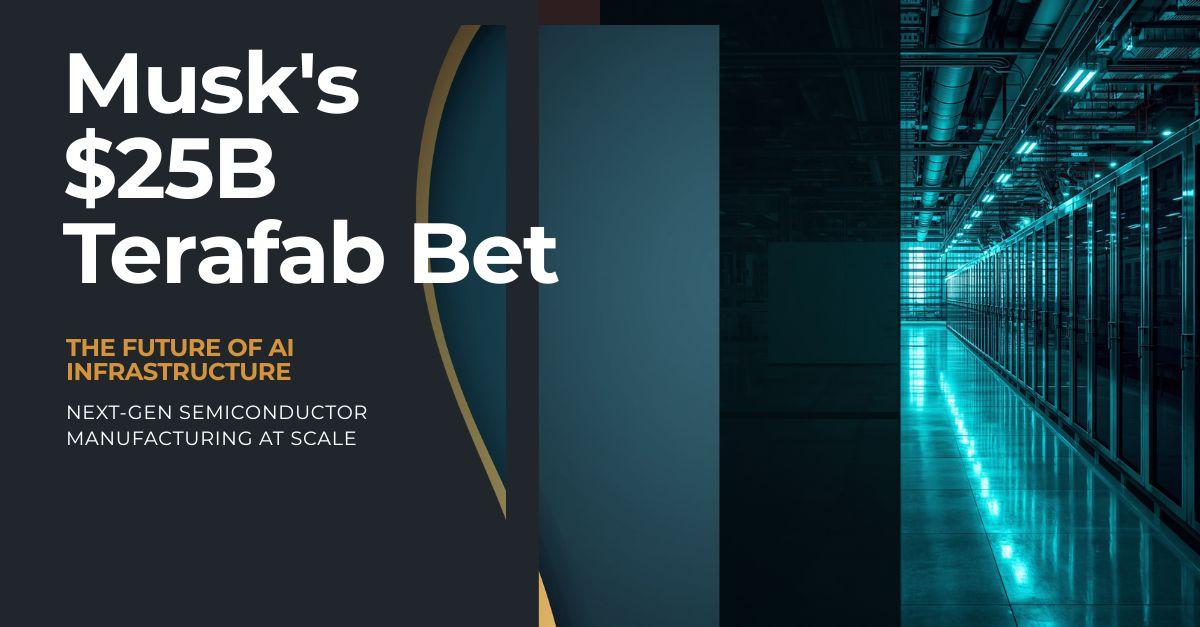
On , standing in a decommissioned Austin power plant, Musk unveiled Terafab, a joint venture between Tesla, SpaceX and xAI to build a semiconductor mega-factory unlike anything the world has ever seen.
The goal? 1 terawatt of AI compute capacity per year. That’s more than every chip manufacturer on Earth produces combined, today and projected through 2030.
Musk’s reasoning is blunt: “We either build the Terafab, or we don’t have the chips, and we need the chips, so we build the Terafab.”
Sceptics point to Tesla’s Battery Day promises from 2020 that took years to materialise. Morgan Stanley estimates the true cost could hit $35–45 billion. This is not without risk.
The AI compute bottleneck is now the defining constraint of our era. Every company planning AI-powered products, services or operations in the next decade will be affected by who controls semiconductor capacity and at what price.
Whether Terafab succeeds or stumbles, AI infrastructure is becoming as strategic as energy infrastructure.
📰 Sources:
Wikipedia · CBS News · TechCrunch · Engadget · Electrek